Paraguay aporta energía hidroeléctrica y minerales críticos a la alianza Pax Silica liderada por EEUU ▶️ Paraguay to contribute hydroelectric power and critical minerals to the U.S.-led Pax Silica alliance
Puntos clave de esta nota:
■ Paraguay formalizó su incorporación como el vigesimosexto país signatario de la Declaración Pax Silica, iniciativa liderada por Estados Unidos para consolidar las cadenas de suministro de la inteligencia artificial.
■ La suscripción bilateral en Washington contó con el canciller Rubén Ramírez Lezcano y el subsecretario Jacob Helberg, enfocándose en la infraestructura de superinteligencia y la seguridad económica regional.
■ El marco multilateral busca reducir las dependencias excesivas mediante la coordinación estratégica de semiconductores, minerales críticos y generación eléctrica en las Américas.
■ El acuerdo contempla el despliegue del primer centro de datos de la firma estadounidense Crusoe Energy en América Latina, en alianza con la empresa paraguaya Araico.
■ La comunicación oficial omitió precisar metas de inversión, plazos de ejecución, estándares técnicos y regulaciones ambientales para los proyectos energéticos y mineros.
Paraguay se convirtió en el 26º signatario de la Declaración Pax Silica tras suscribir un acuerdo bilateral con la administración de Estados Unidos en Washington D. C. La firma formaliza la integración de la generación hidroeléctrica paraguaya y sus recursos minerales críticos dentro de la estrategia norteamericana para construir infraestructura de superinteligencia y asegurar la cadena global de suministro de inteligencia artificial.
Firma oficial en Washington posiciona a Paraguay como el vigesimosexto signatario global de la alianza
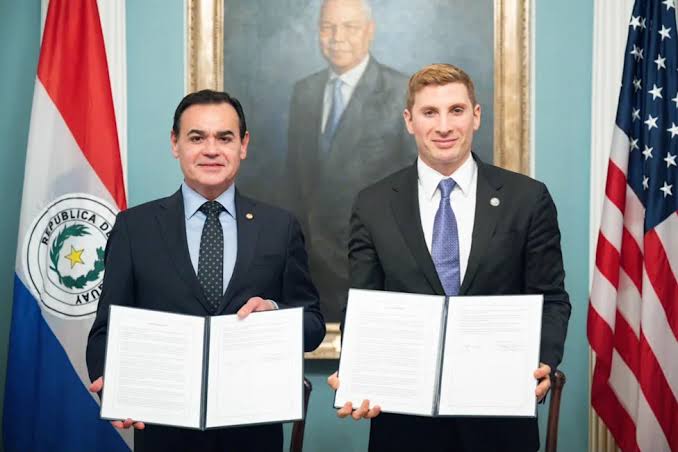
La formalización de la adhesión paraguaya tuvo lugar durante una ceremonia oficial realizada en la sede del Departamento de Estado de Estados Unidos, ubicada en la capital estadounidense. La suscripción del documento contó con la participación directa del ministro de Relaciones Exteriores de Paraguay, Rubén Ramírez Lezcano, y del subsecretario de Estado para Asuntos Económicos estadounidense, Jacob Helberg. La Oficina del Portavoz del gobierno de Estados Unidos ratificó el acto, señalando que este paso da inicio formal a la participación operativa del país suramericano en el mecanismo regional.
El anuncio político fue comunicado posteriormente por el presidente de Paraguay, Santiago Peña, mediante una declaración difundida en la red social X. El mandatario calificó la incorporación como uno de los resultados directos de la gira de trabajo realizada la víspera en la ciudad de Washington. En su intervención, el jefe de Estado sostuvo que Paraguay dejó de ser un consumidor pasivo de tecnología para transformarse en un actor productor dentro del mercado internacional.
La ratificación institucional estuvo precedida por la visita oficial a territorio paraguayo del subsecretario de Estado de Estados Unidos, Christopher Landau, desarrollada entre el lunes y el miércoles de la misma semana. Las reuniones de Landau con autoridades locales se concentraron en expandir la cooperación bilateral en materia de seguridad y fomentar la llegada de inversiones de capital estadounidense.
Alcance del acuerdo multilateral y la nómina de países latinoamericanos participantes
La iniciativa Pax Silica fue presentada originalmente en diciembre de 2025 bajo la administración del presidente Donald Trump. El esquema constituye la plataforma insignia del gobierno estadounidense en materia de inteligencia artificial y seguridad de redes de suministro, orientada a estructurar un nuevo marco de seguridad económica a escala global. El propósito central radica en hacer frente a la competencia de China, reduciendo la dependencia internacional respecto al mercado chino en sectores de semiconductores, conectividad y materias primas estratégicas.
La alianza internacional reúne actualmente a 26 naciones firmantes, entre las que figuran los Estados miembros de la Unión Europea. En el ámbito de América Latina, Paraguay se suma a un bloque integrado por Argentina, Chile, Costa Rica, El Salvador y Panamá. La coalición busca definir normas compartidas para el resguardo de infraestructuras críticas y la creación de mercados tecnológicos confiables.
Articulación de la matriz hidroeléctrica paraguaya y los minerales críticos con la demanda tecnológica
El eje central de la convergencia entre Washington y Asunción radica en la valorización conjunta de dos activos estructurales del territorio paraguayo: su potencial de generación hidroeléctrica limpia y renovable y la presencia de minerales considerados estratégicos. Ambos elementos fueron identificados por las delegaciones como insumos fundamentales para respaldar el desarrollo de instalaciones de procesamiento informático de alta capacidad.
Durante el acto de firma, las autoridades revalidaron la perspectiva compartida sobre el cambio en los factores de producción globales. El subsecretario Jacob Helberg enfatizó que si el siglo XX estuvo determinado por el acceso al petróleo y al acero, el siglo XXI se encuentra configurado por la potencia de cálculo computacional y los minerales requeridos para alimentarla. Bajo este principio, la alianza plantea que los socios geopolíticos coordinen la edificación del ecosistema integral de la inteligencia artificial.
La demanda de energía continua y limpia responde a las necesidades operativas que imponen los centros de datos y las redes de procesamiento informático. Las proyecciones de la iniciativa contemplan que la reorganización económica mundial derivada del desarrollo tecnológico exigirá una masa crítica de infraestructura energética y la apertura de nuevos mercados de conectividad e insumos industriales.
Proyectos de procesamiento digital y alianzas entre Crusoe Energy y Araico
En el marco de la adhesión al programa tecnológico, se confirmó la concreción de un acuerdo comercial para el establecimiento del primer centro de datos de la empresa estadounidense Crusoe Energy en América Latina. Esta instalación industrial se levantará en suelo paraguayo mediante un esquema de asociación estratégica con la firma local Araico.
El proyecto busca canalizar la oferta eléctrica de origen hidroeléctrico hacia el soporte directo de operaciones informáticas avanzadas. Las declaraciones oficiales indicaron que el emplazamiento industrial apunta a consolidar redes confiables de almacenamiento y procesamiento de datos, reforzando la seguridad de las cadenas de insumos y fomentando la creación de empleo calificado e inversión extranjera directa en el mercado local.
Vacíos operativos en la información oficial sobre inversiones, plazos y regulación
A pesar de los lineamientos generales difundidos durante la ceremonia en Washington, las notas oficiales emitidas por la administración de Estados Unidos omitieron precisar detalles técnicos, financieros y regulatorios sobre la ejecución de los proyectos. El Departamento de Estado no especificó montos de inversión comprometidos, plazos para el inicio de obras ni metas concretas de volumen de producción de energía destinada a estas instalaciones.
Respecto al componente extractivo e industrial, los comunicados gubernamentales no precisaron cuáles minerales críticos específicos forman parte de la cooperación bilateral. Tampoco se informó sobre la suscripción de acuerdos adicionales referidos a fases de exploración, extracción, procesamiento local o esquemas de exportación de materias primas minerales.
Asimismo, la documentación pública no incluyó una definición técnica formal del término superinteligencia, ni estableció criterios ambientales, normativas regulatorias o mecanismos de supervisión institucional. Hasta el momento del anuncio, la información sobre el entendimiento se restringe a los postulados del comunicado de prensa y a los mensajes emitidos por las autoridades presentes en la firma.
LTSAN
Key Takeaways in this article:
■ Paraguay formally became the 26th signatory to the Pax Silica Declaration, a U.S.-led initiative to strengthen artificial intelligence supply chains.
■ The bilateral signing ceremony in Washington was attended by Foreign Minister Rubén Ramírez Lezcano and Undersecretary Jacob Helberg, with a focus on superintelligence infrastructure and regional economic security.
■ The multilateral framework aims to reduce excessive dependencies through strategic coordination of semiconductors, critical minerals, and electricity generation in the Americas.
■ The agreement provides for the deployment of the first data center by the U.S. firm Crusoe Energy in Latin America, in partnership with the Paraguayan company Araico.
■ The official statement did not specify investment targets, implementation timelines, technical standards, or environmental regulations for the energy and mining projects.
Paraguay became the 26th signatory to the Pax Silica Declaration after signing a bilateral agreement with the U.S. administration in Washington, D.C. The agreement formalizes the integration of Paraguay’s hydroelectric power generation and its critical mineral resources into the U.S. strategy to build superintelligence infrastructure and secure the global artificial intelligence supply chain.
Official signing in Washington makes Paraguay the 26th global signatory to the alliance
Paraguay’s accession was formalized during an official ceremony held at the U.S. Department of State headquarters in the U.S. capital. The signing of the document was attended by Paraguay’s Minister of Foreign Affairs, Rubén Ramírez Lezcano, and the U.S. Under Secretary of State for Economic Affairs, Jacob Helberg. The Office of the Spokesperson for the U.S. government confirmed the event, noting that this step formally marks the start of the South American country’s operational participation in the regional mechanism.
The political announcement was subsequently made by Paraguay’s President, Santiago Peña, through a statement posted on the social media platform X. The president described the accession as one of the direct outcomes of the working visit he had undertaken the previous day in Washington, D.C. In his remarks, the head of state stated that Paraguay had ceased to be a passive consumer of technology and had become a producer in the international market.
The institutional ratification was preceded by an official visit to Paraguay by U.S. Under Secretary of State Christopher Landau, which took place from Monday through Wednesday of that same week. Landau’s meetings with local authorities focused on expanding bilateral cooperation on security matters and encouraging U.S. capital investment.
Scope of the Multilateral Agreement and List of Participating Latin American Countries
The Pax Silica initiative was originally unveiled in December 2025 under the administration of President Donald Trump. The initiative serves as the U.S. government’s flagship platform for artificial intelligence and supply chain security, aimed at establishing a new global economic security framework. The central objective is to counter competition from China by reducing international dependence on the Chinese market in the sectors of semiconductors, connectivity, and strategic raw materials.
The international alliance currently brings together 26 signatory nations, including the member states of the European Union. In Latin America, Paraguay joins a bloc comprising Argentina, Chile, Costa Rica, El Salvador, and Panama. The coalition seeks to establish shared standards for the protection of critical infrastructure and the creation of reliable technology markets.
Aligning Paraguay’s Hydroelectric Infrastructure and Critical Minerals with Technological Demand
The central focus of the convergence between Washington and Asunción lies in the joint development of two structural assets of Paraguay: its potential for clean, renewable hydroelectric power generation and the presence of minerals considered strategic. Both elements were identified by the delegations as essential inputs for supporting the development of high-capacity data processing facilities.
During the signing ceremony, the authorities reaffirmed their shared perspective on the shift in global factors of production. Undersecretary Jacob Helberg emphasized that while the 20th century was defined by access to oil and steel, the 21st century is shaped by computational power and the minerals required to fuel it. Based on this principle, the alliance proposes that the geopolitical partners coordinate the development of a comprehensive artificial intelligence ecosystem.
The demand for continuous, clean energy meets the operational needs of data centers and computing networks. The initiative’s projections indicate that the global economic restructuring resulting from technological development will require a critical mass of energy infrastructure and the opening of new markets for connectivity and industrial inputs.
Digital Processing Projects and Partnerships Between Crusoe Energy and Araico
As part of the country’s participation in the technology program, a commercial agreement was finalized to establish the first data center in Latin America for the U.S. company Crusoe Energy. This industrial facility will be built in Paraguay through a strategic partnership with the local firm Araico.
The project aims to channel hydroelectric power to directly support advanced computing operations. Official statements indicated that the industrial site seeks to consolidate reliable data storage and processing networks, strengthening the security of supply chains and promoting the creation of skilled jobs and foreign direct investment in the local market.
Operational Gaps in Official Information on Investments, Timelines, and Regulation
Despite the general guidelines announced during the ceremony in Washington, the official statements issued by the U.S. administration failed to provide technical, financial, and regulatory details regarding the implementation of the projects. The State Department did not specify the amounts of investment committed, timelines for the start of construction, or concrete targets for the volume of energy production at these facilities.
Regarding the extractive and industrial component, government statements did not specify which specific critical minerals are part of the bilateral cooperation. Nor was there any information provided on the signing of additional agreements related to exploration, extraction, local processing, or export schemes for mineral raw materials.
Furthermore, the public documentation did not include a formal technical definition of the term “superintelligence,” nor did it establish environmental criteria, regulatory standards, or institutional oversight mechanisms. As of the time of the announcement, information regarding the agreement is limited to the statements in the press release and the remarks made by the officials present at the signing ceremony.
LTSAN
Descubre más desde Lithium Triangle South America -News
Suscríbete y recibe las últimas entradas en tu correo electrónico.